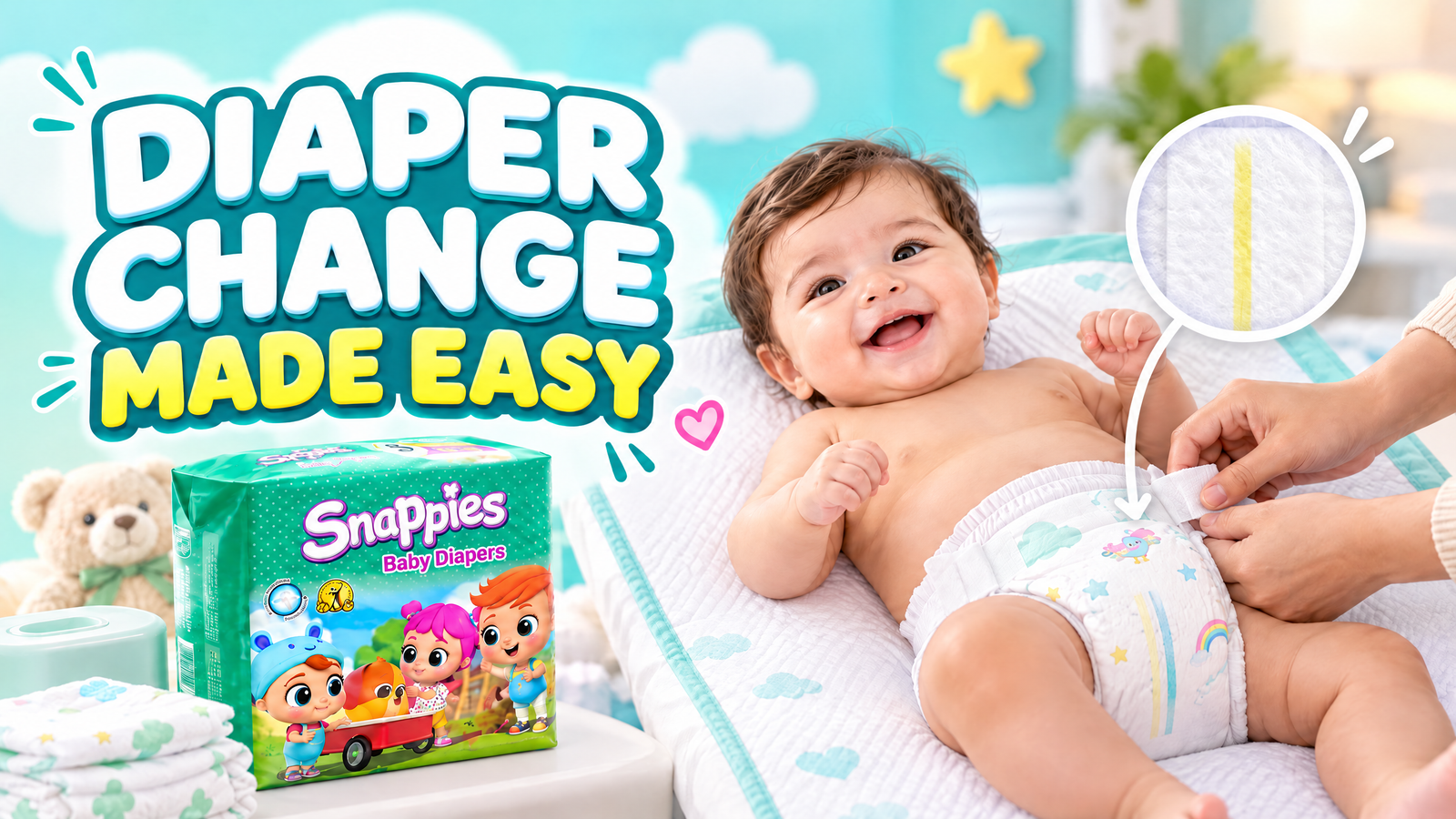
Changing a diaper becomes part of everyday life with a baby. A calm, prepared setup can make the process easier for both parent and child. Whether you are learning how to change a newborn diaper or refreshing your routine with an older baby, keep the clean diaper, wipes and disposal option within reach before you begin. Never leave a baby unattended on a changing surface; keep one hand on your baby whenever you need to reach for something. Prepare a safe changing space Choose a clean, stable surface and gather everything first: a fresh diaper, baby wipes or a clean damp cloth, and a safe place for the used diaper. If you use a raised changing table, stay beside your baby and keep a hand on them. A floor-level changing mat can be a practical option too. Set supplies where you can reach them without turning away or stepping away from your baby. Keep the diapering supplies clean, dry and stored within easy reach. Wash your hands before you start if possible. Lay your baby on their back and open the used diaper. If there is stool, use the front of the diaper to remove some of it before folding the diaper closed. Clean your baby’s diaper area gently with a fresh wipe or cloth. For babies who wear diapers, wipe from front to back, especially when cleaning a girl. Put on a clean diaper Slide the clean diaper under your baby, with the fastening tabs positioned beneath the bottom. Make sure the diaper is centered and pulled up evenly at the front and back. Fasten the tabs so the fit is secure but not uncomfortably tight. Check around the legs and gently pull out the cuffs so they are not folded inward. This helps the diaper sit properly and may help reduce gaps. Follow the instructions on the diaper pack for the specific product. Fold the used diaper inward and place it with the used wipes in an appropriate lined bin. Clean any soiled changing surface. Wash your hands after changing your baby; the CDC also recommends washing the child’s hands and cleaning the diapering surface as part of good hygiene. When should you change a baby’s diaper? Check your baby’s diaper regularly and change it when it is wet or soiled. Newborns may need frequent changes; the American Academy of Pediatrics notes that parents may change as many as eight to twelve diapers a day once they settle into the routine. Every baby is different, so use your baby’s needs, the diaper’s condition and your healthcare professional’s advice as your guide. Snappies diapers include a wetness indicator to help parents check whether it may be time for a change. On the Snappies guide shown with the product, yellow indicates a dry diaper and green indicates that it is wet. Check the indicator on your own diaper and follow the instructions for that pack, since product details can vary. The line is a helpful visual cue, but it does not replace checking your baby’s comfort or changing a soiled diaper promptly. Make changes more comfortable Keep your movements gentle and talk to your baby as you change them. With a newborn, you may find it helpful to keep the rest of their body covered while changing. Make sure the clean diaper is ready before removing the old one, and keep creams or other products nearby only if you already use them as advised. If you notice persistent redness, sores or irritation, seek guidance from your child’s healthcare professional rather than relying on a diaper feature or online article for treatment. When you are away from home, pack a few diapers in the size your baby currently wears, wipes, a changing mat and a bag for used items. Check the diaper after travel, naps and feeds as needed. A small routine can make diaper changes feel more manageable wherever the day takes you. If your baby is moving or rolling, keep the changing area clear and maintain a hand on them throughout the change. Place the used diaper and wipes out of your baby’s reach, then clean the surface if it becomes soiled. Before packing supplies for an outing, check that you have enough diapers for the trip and one or two extras in case plans take longer than expected. Keep a clean diaper ready before you remove the old one, so your baby spends less time uncovered. These simple preparations help keep the process calm and organized at home or away. A quick routine to remember Prepare the supplies, keep your baby safe, clean gently, fasten a fresh diaper comfortably, dispose of used items and wash your hands. Check the diaper regularly and use the Snappies wetness indicator as an extra cue. With practice, changing a baby’s diaper becomes a simple part of caring for your little one. Explore Snappies baby diapers and wipes online for your everyday baby-care routine.
Choosing a diaper size is about more than picking newborn, small, medium or large. A good fit helps your baby move comfortably and helps reduce gaps that can lead to leaks. If you are searching for a baby diaper size guide in Pakistan, start with your baby’s current weight, then check how the diaper fits around the waist and legs. Age can be a rough clue, but babies grow at different rates, so it should not be the only way you choose. Start with the size guide on the pack Diaper sizes are not identical across brands. The weight range for one brand’s medium may not match another brand’s medium. Check the size chart printed on the Snappies pack or the product listing before ordering, and use the current weight range shown there. Snappies offers New Born, Small, Medium, Large, XLarge and XXLarge options on its website. Available sizes and pack types can vary by product, so confirm the listing for the exact pack you want. If your baby is between two weight ranges, use fit as well as weight to decide. Babies can have different body shapes even when they weigh the same. A diaper should sit securely without feeling tight. The waistband should fasten comfortably, the leg openings should sit close without digging into the skin, and the diaper should cover your baby’s bottom. Check the product’s own size guidance rather than relying on a generic baby diaper size chart from another country or brand. Check the fit after fastening After fastening a clean diaper, make sure it is centered and sits comfortably around the waist. Check that the leg cuffs are pulled out and not tucked inward. Gaps around the legs may allow leaks, while a very tight fit can leave marks or make your baby uncomfortable. The diaper should cover the bottom and remain in place as your baby moves. A fit check is useful after every size change and whenever your baby’s body shape changes. Signs it may be time to size up Your baby may need the next size if the fastening tabs are difficult to close, the waistband feels tight, or the diaper leaves red marks. Repeated leaks or blowouts can also be a sign to check the fit. First make sure the diaper is being put on correctly and that the cuffs are turned out. If problems continue, compare your baby’s current weight with the next size range on the pack. These signs are useful clues, not a diagnosis; every baby’s fit is different. A diaper that is too large can also leak. If there are visible gaps around the legs or the diaper shifts around, the next size may be premature even if you are eager to move up. Try to find the size that sits securely without restricting your baby. If skin irritation persists or you are worried about your baby’s skin, ask a healthcare professional for advice. During the first few weeks, check the fit often because babies can gain weight and change shape quickly. Avoid choosing a size only because it is marked for a particular age. Your baby’s current weight and the way the diaper fits are more useful clues. Choose packs around your family’s routine Once you know the size, compare the Snappies pack options available for it. The website lists different pack formats, including Mega, Economy, Jumbo, Jumbo Economy and Saving Pack. Pack counts vary by size and range, so check the specific product details before buying. If your baby is close to moving up, consider trying a smaller pack before stocking up on many diapers in the current size. Babies grow quickly, especially during the early months, and a size that fits today may not fit for long. For online orders, review the product name, size, pack count and delivery information at checkout. Snappies’ website offers diaper products and online ordering in Pakistan. If you are unsure which pack to choose, contact the company through its published support channels and share the size options you are comparing. When comparing options, focus on the size and quantity that suit your household rather than choosing a pack by its name alone. Check the product details carefully, since the same pack format may have different counts across sizes. This makes it easier to plan your next order without buying more of a size your baby may soon outgrow. A simple size-selection checklist Weigh your baby and compare the result with the weight range printed on the Snappies pack. Fasten the diaper and check the waistband, leg cuffs and coverage. Look for persistent tightness, red marks, gaps or repeated leaks. If the fit is comfortable and secure, the current size may still be suitable. When it is time to move up, use the next pack’s size guide rather than choosing by age alone. The right diaper size is the one that fits your baby’s current body comfortably. Check the guide, watch how the diaper sits, and adjust as your little one grows. Explore Snappies’ available baby diaper sizes and pack options online to find the right fit for your family’s routine.